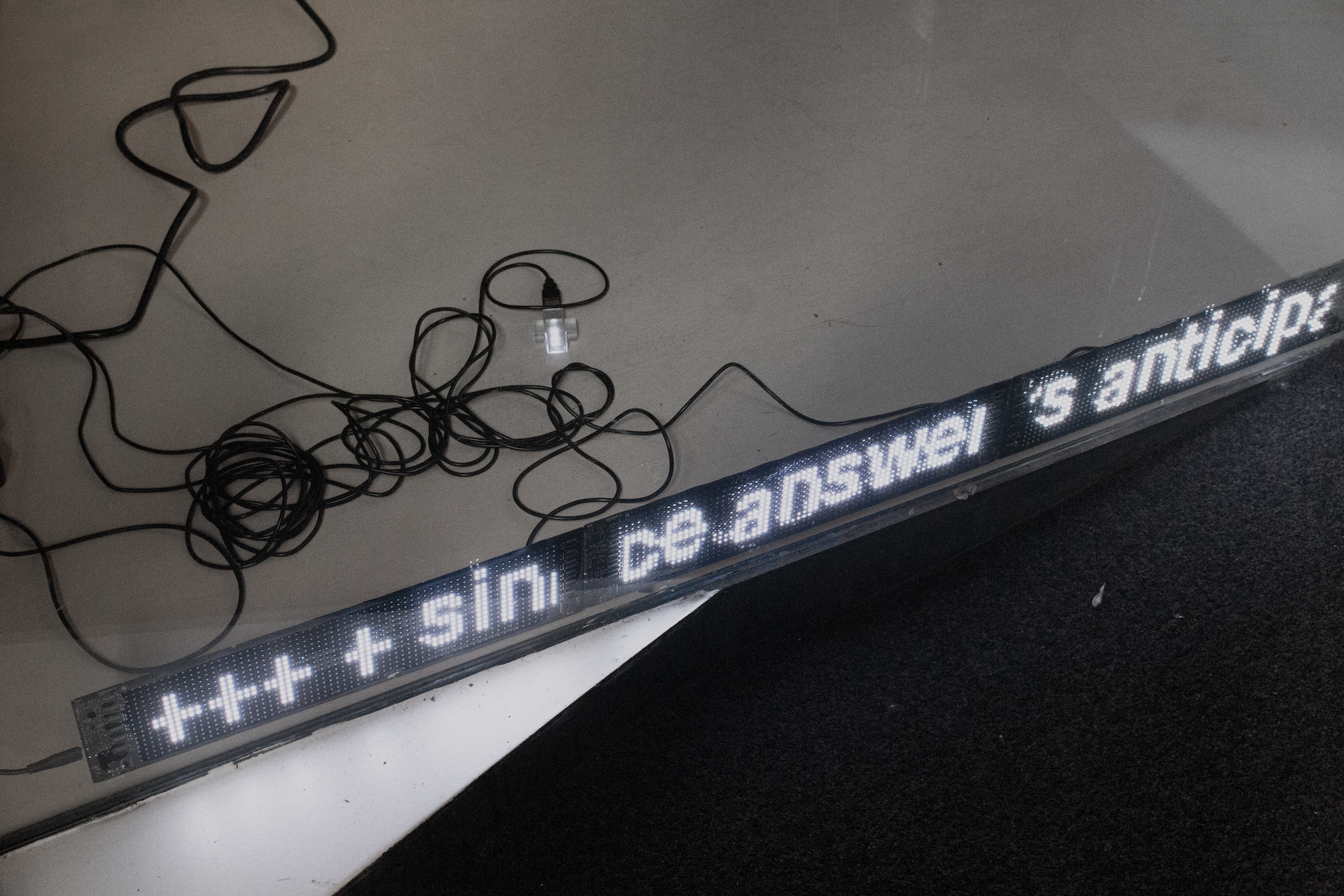
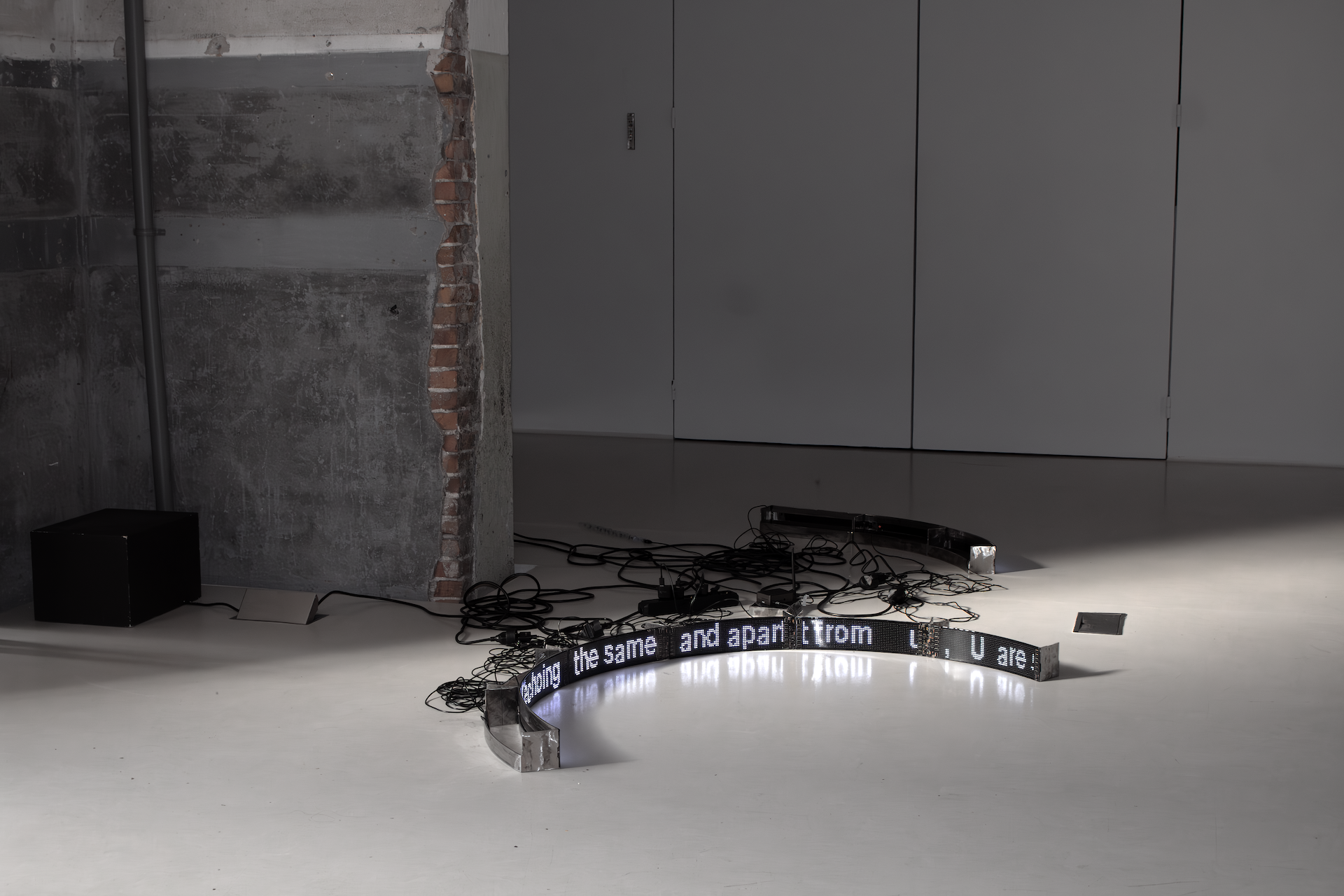
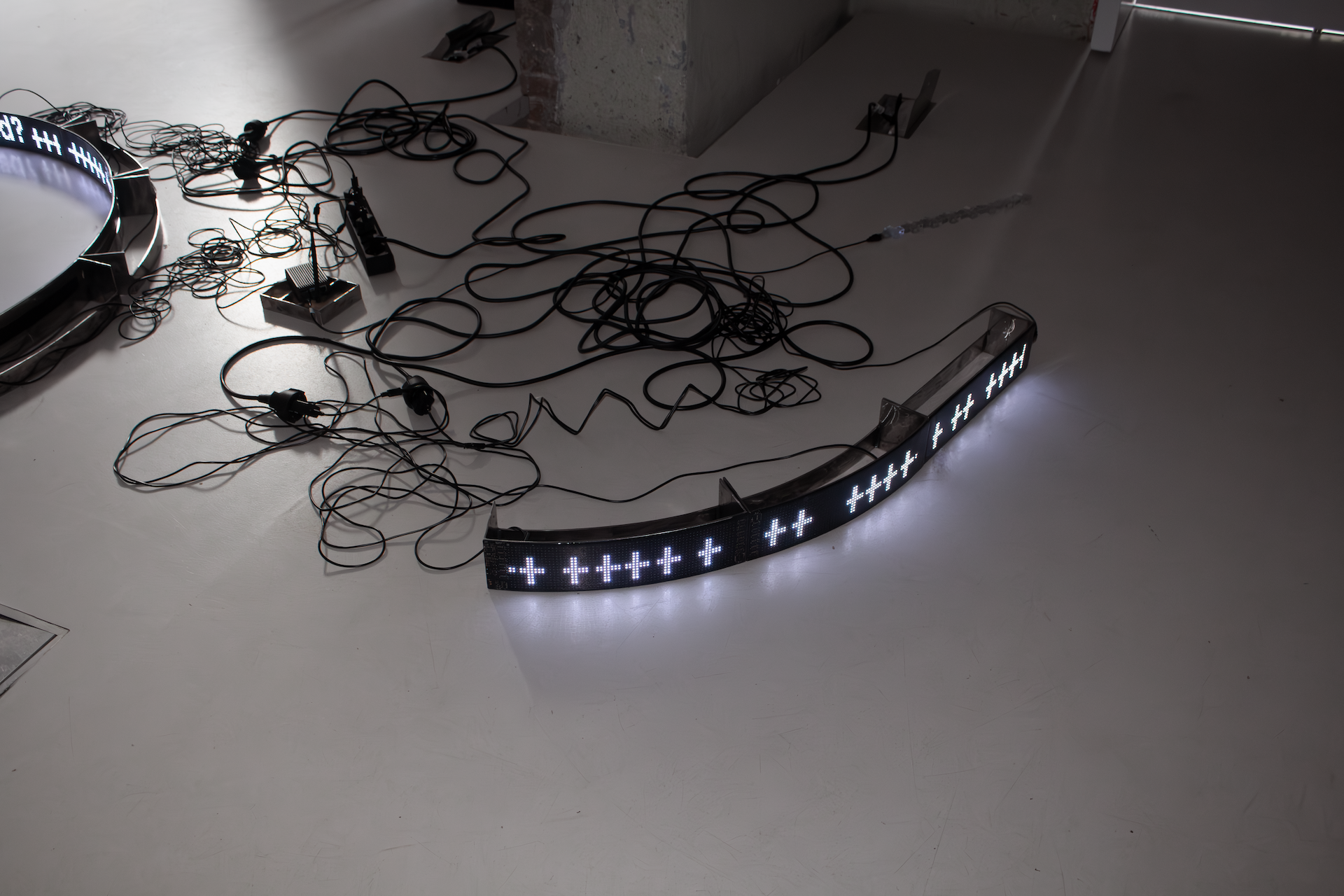
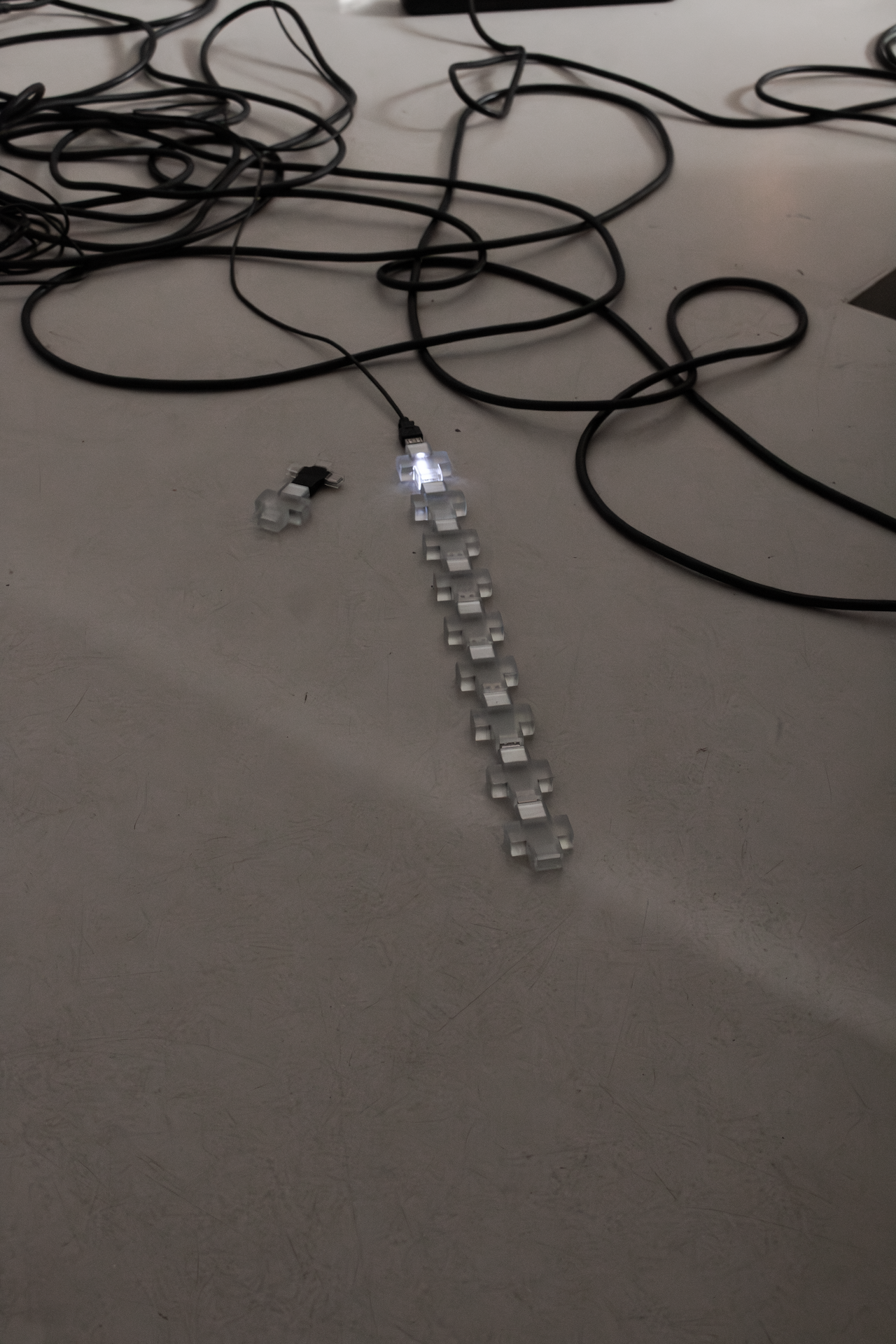
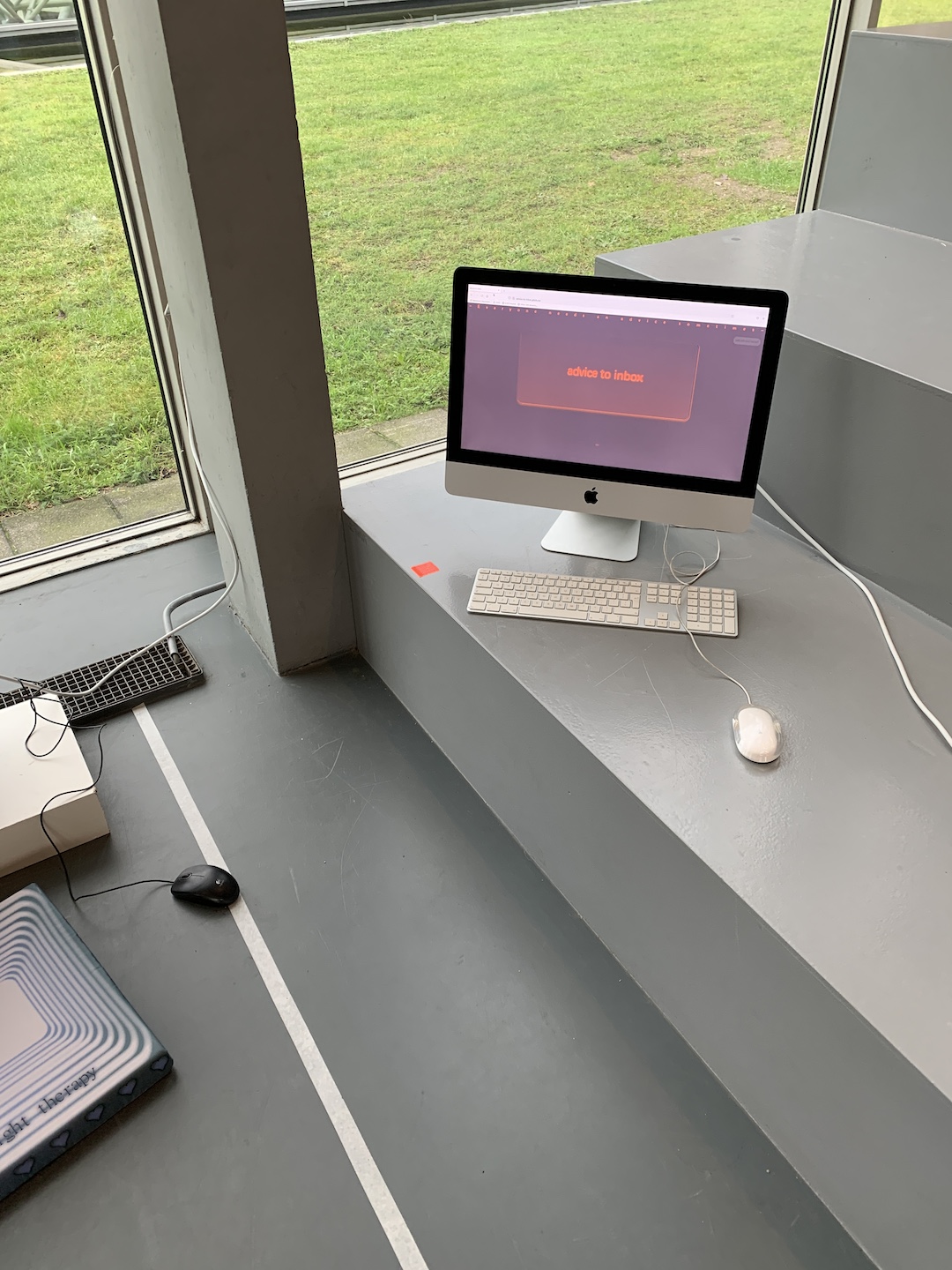
How can we reclaim agency without competing on machines terms. you were never meant to beat what was built to win are hacked advertisment screens, displaying highly ambiguous gossip over a hijacked bluetooth connection. Spread throughout the exhibtion space, they ask to rethink the terms of condition(ing) we all agreed on, the pre-defined absurdities embedded in the default logics of technological systems and our performance of scripted clichés. Who gets to make sense of these pre-definitions? On terms already set, this is a lost cause-a calculated tragedy of a loser. And that luser is you. By drawing on the loser's condition of never winning the work embraces the user’s incompetence, their intuitive capacity to interpret ambiguity. It is all about the second thought: rethinking the literal, the establishedthe imposed version of reality technology presents to us. In reclaiming tech-vernacular, the displayed text turns into a bypassed insider joke, a hijacked misunderstanding, a reflexive parody, inciting the system to implode from within. Let’s laugh about defaults, tight-lipped, refusing to reveal the punchlines.
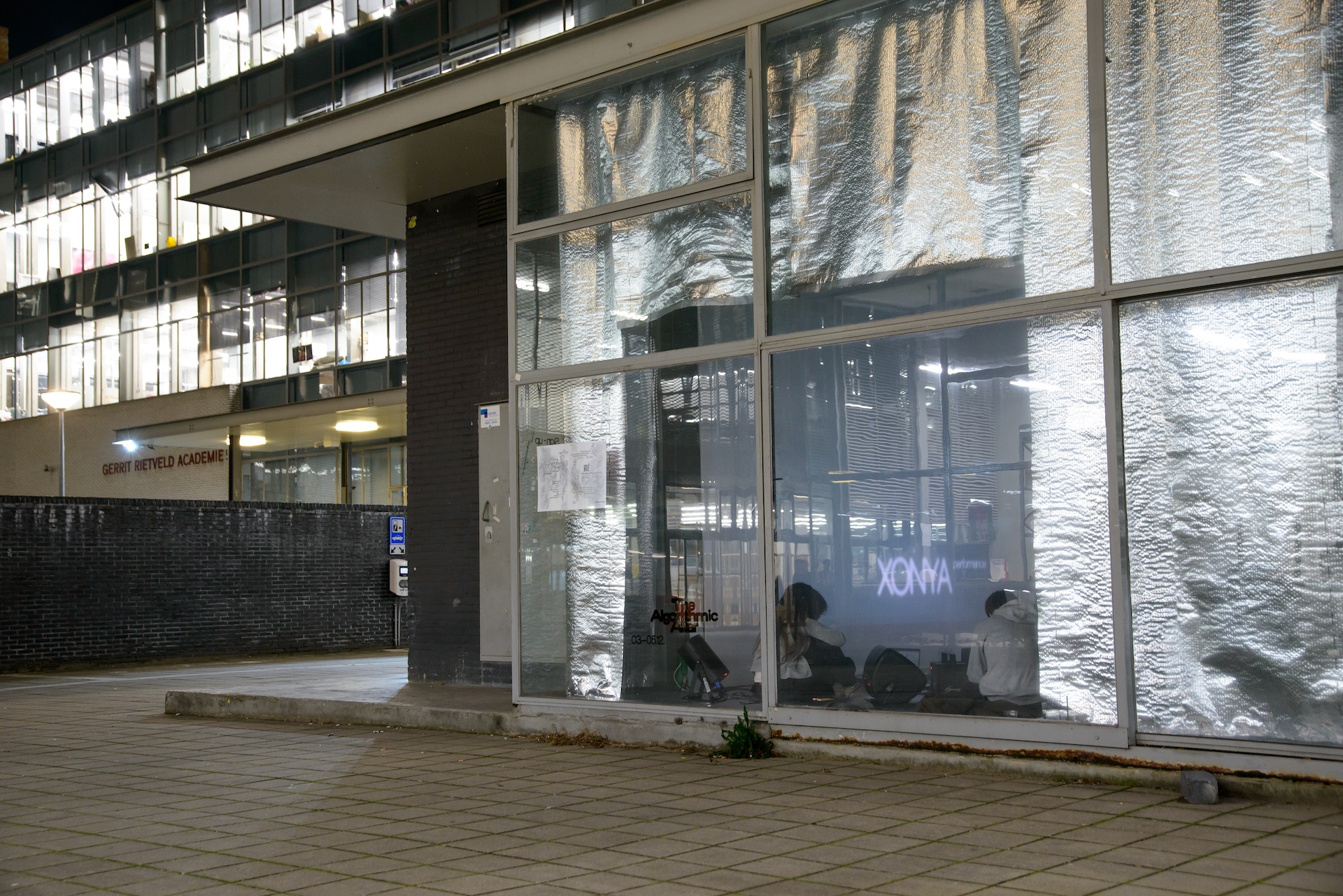
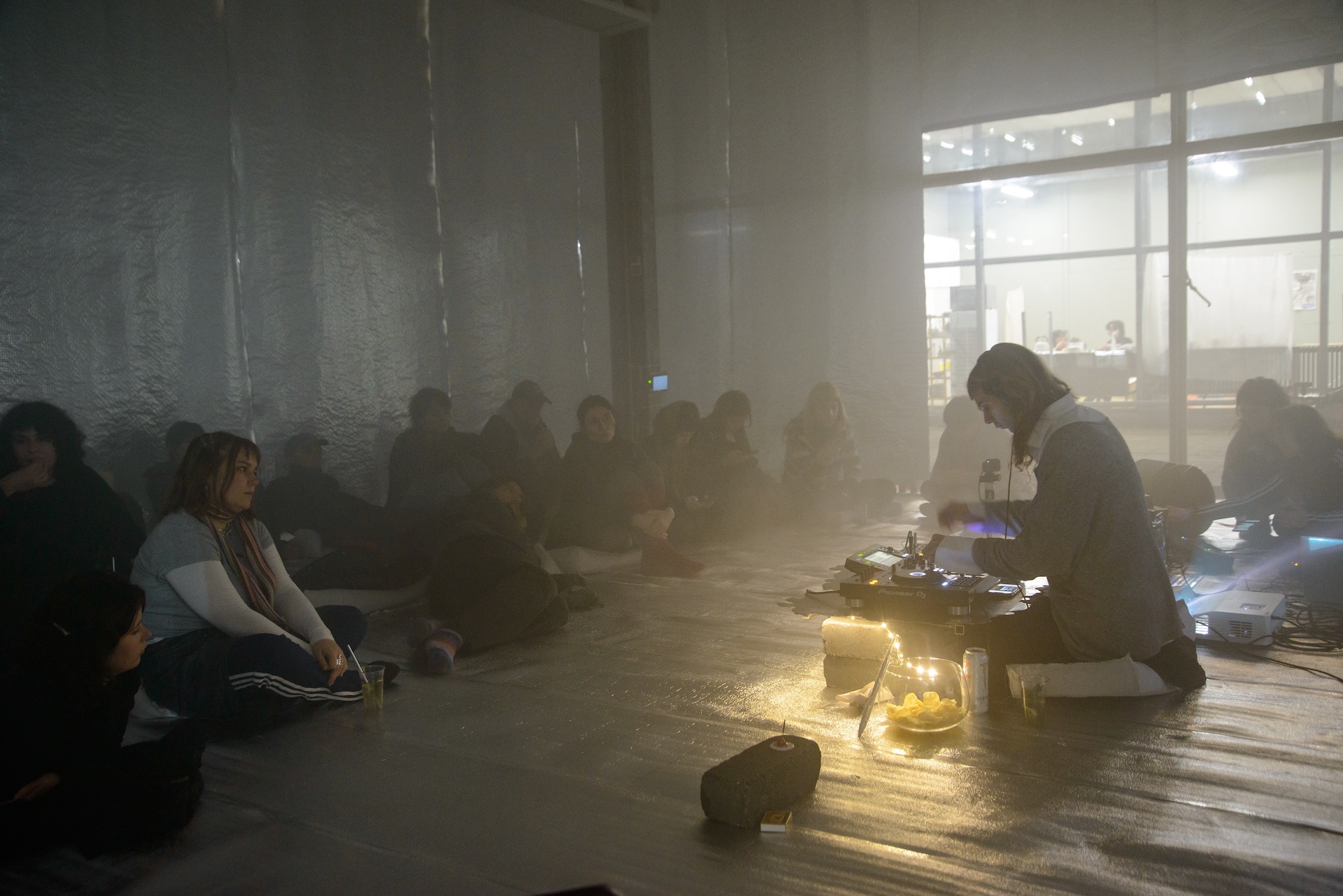
The Algorithmic Altar is a multi-day event at the Pavilion of the Gerrit Rietveld Academie in Amsterdam, coorganised/ hosted together with Adele Stroh and kindly supported by Publics & Projects Rietveld. Through an opening - lecture, a workshop and sound performances, The Algorithmic Altar invites visitors to step into the obfuscated glas box and explore collectively a space where code and ritual converge and offer a new view on technology, not merely as a tool, but as the continuation of our oldest magic: transforming desire into form, and imagination into world. With contributions from Hanneke Klaver + Milan Gress (Workshop: holding space for defying gravity), Julia Kerres (constribution to set design) and sound performances by servicekit, XONYA, krai, emeel
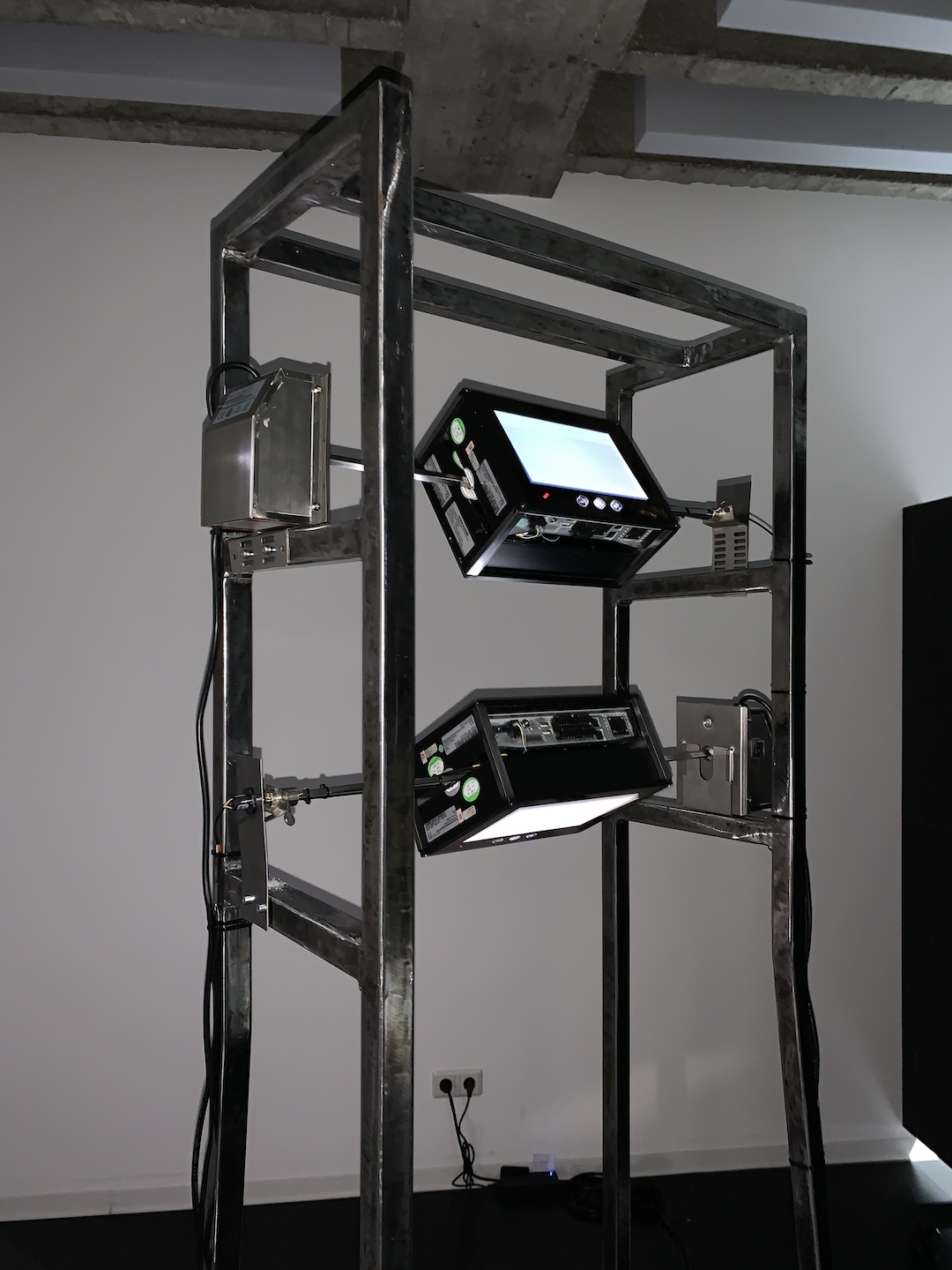
This project is an attempt to describe the relationship between
users and computerized machines through a metaphorical lens,
visually conceptualized by the dynamics of a chicken-grill
relationship. In this symbolic representation, both parts are
understood as integral components of a performance, wherein
machines (aka grill) represents programmed concepts that
choreograph the actions of their users (aka chickens).
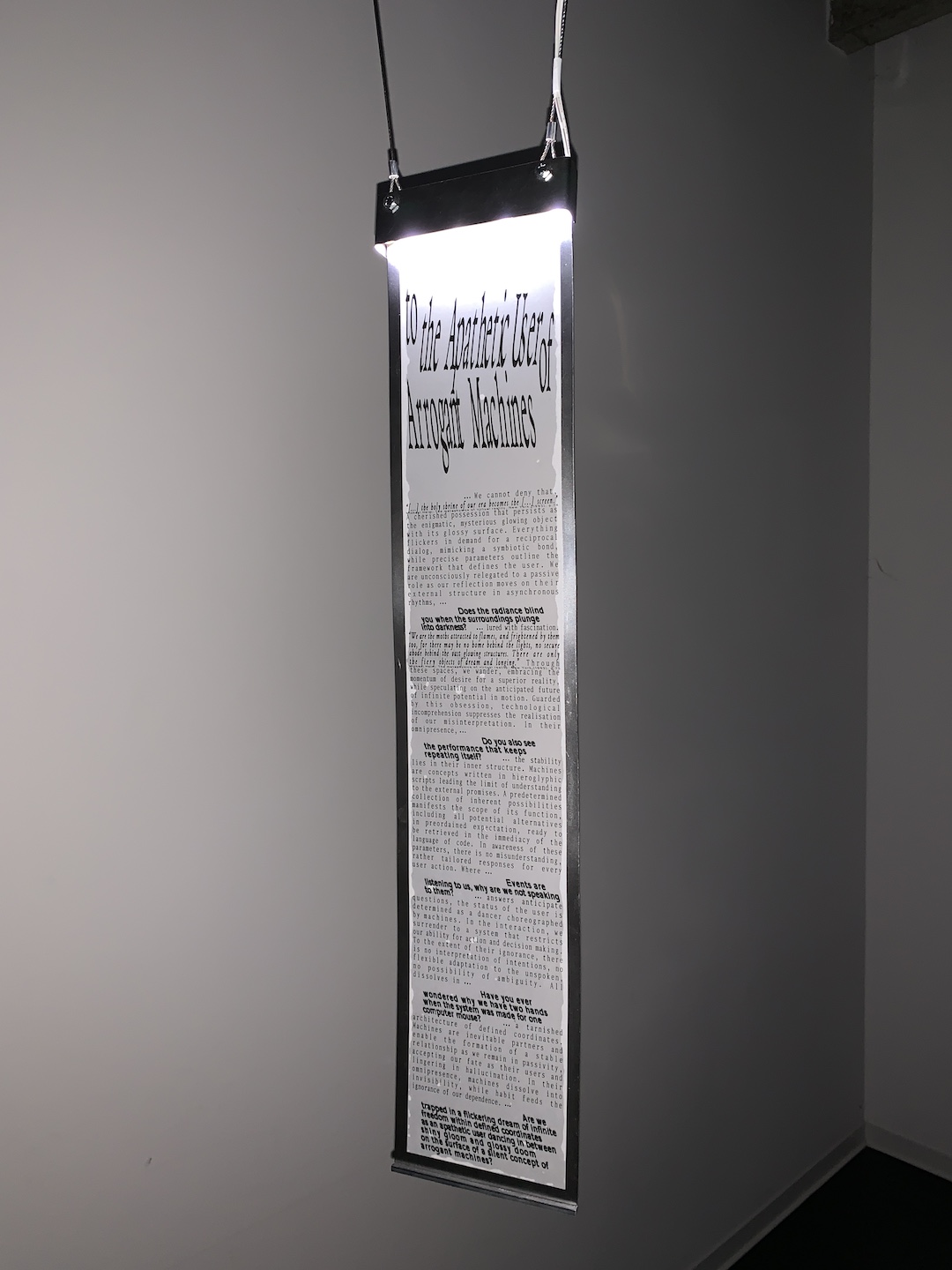
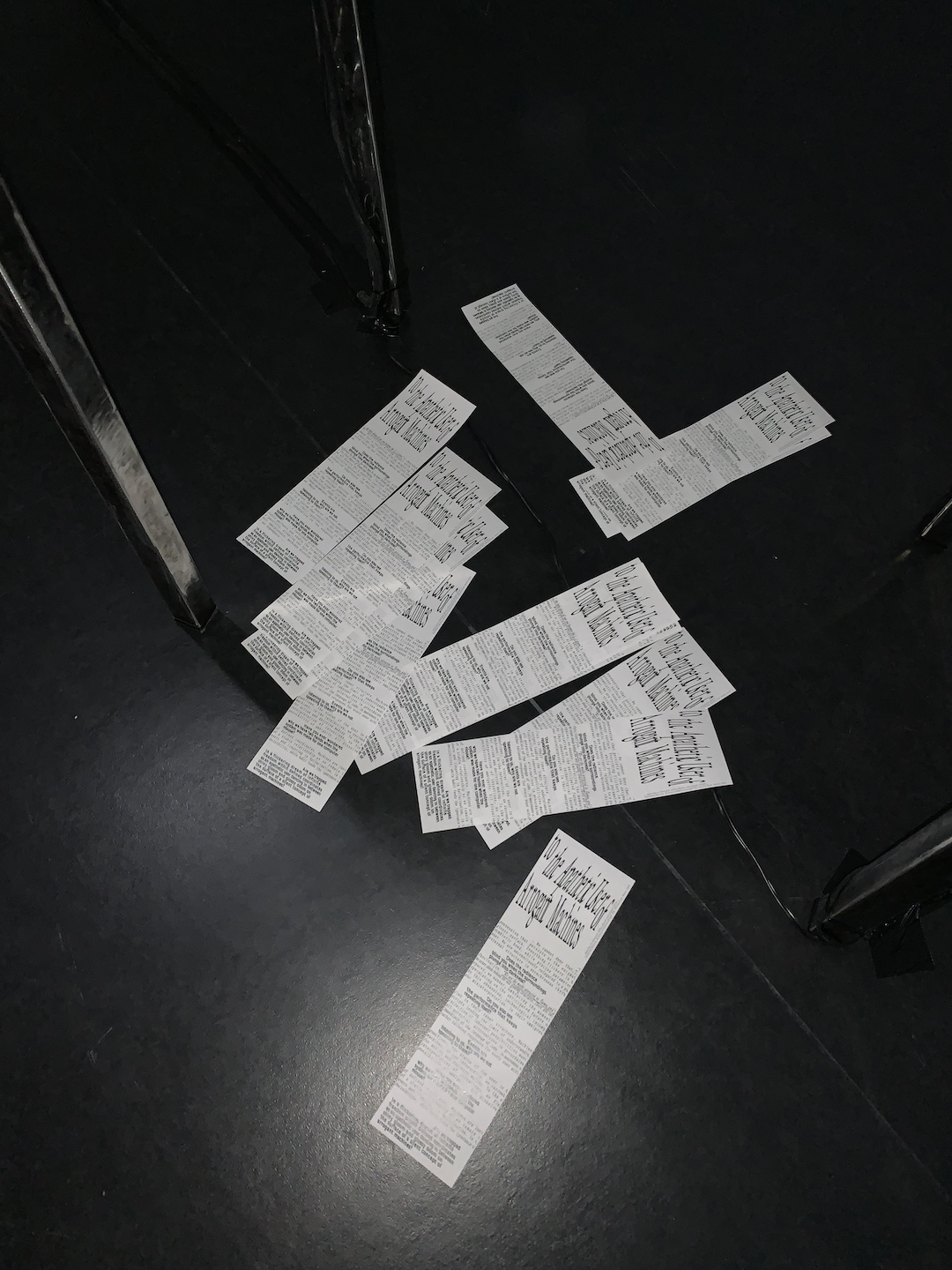
Accompanying the installation is a
letter titled
"To the Apathetic User of Arrogant Machines" which speaks
to the user. It addresses the tendency of users to passively adapt
to the predetermined parameters set by software frameworks when
engaging with computer-aided machines. In this dynamic, the
characteristics of the program code determine the scope of user
actions in advance, leaving no room for ambiguity, interpretation,
or flexibility in interaction.
Graduation Project, 2024
(Read my thesis)
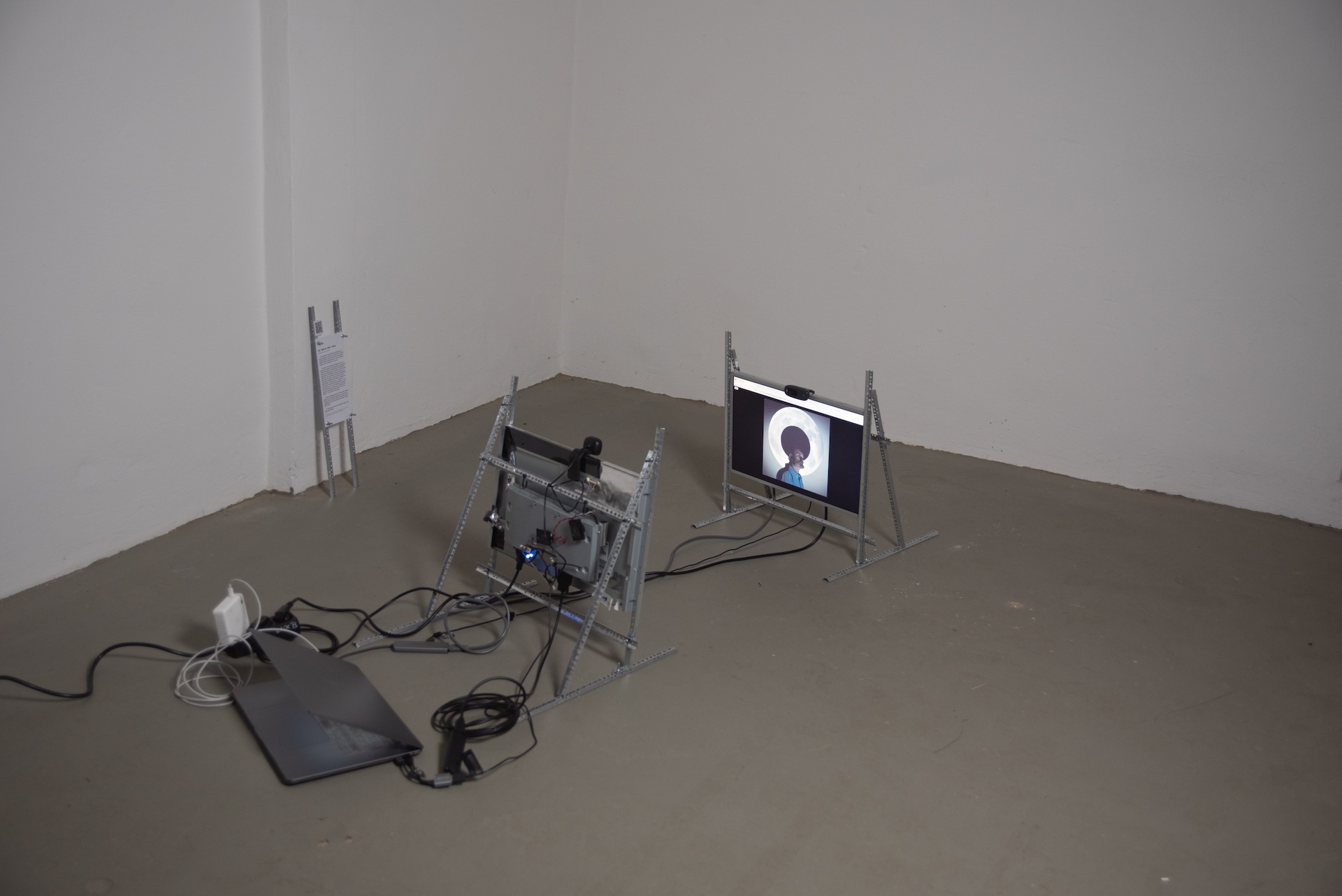
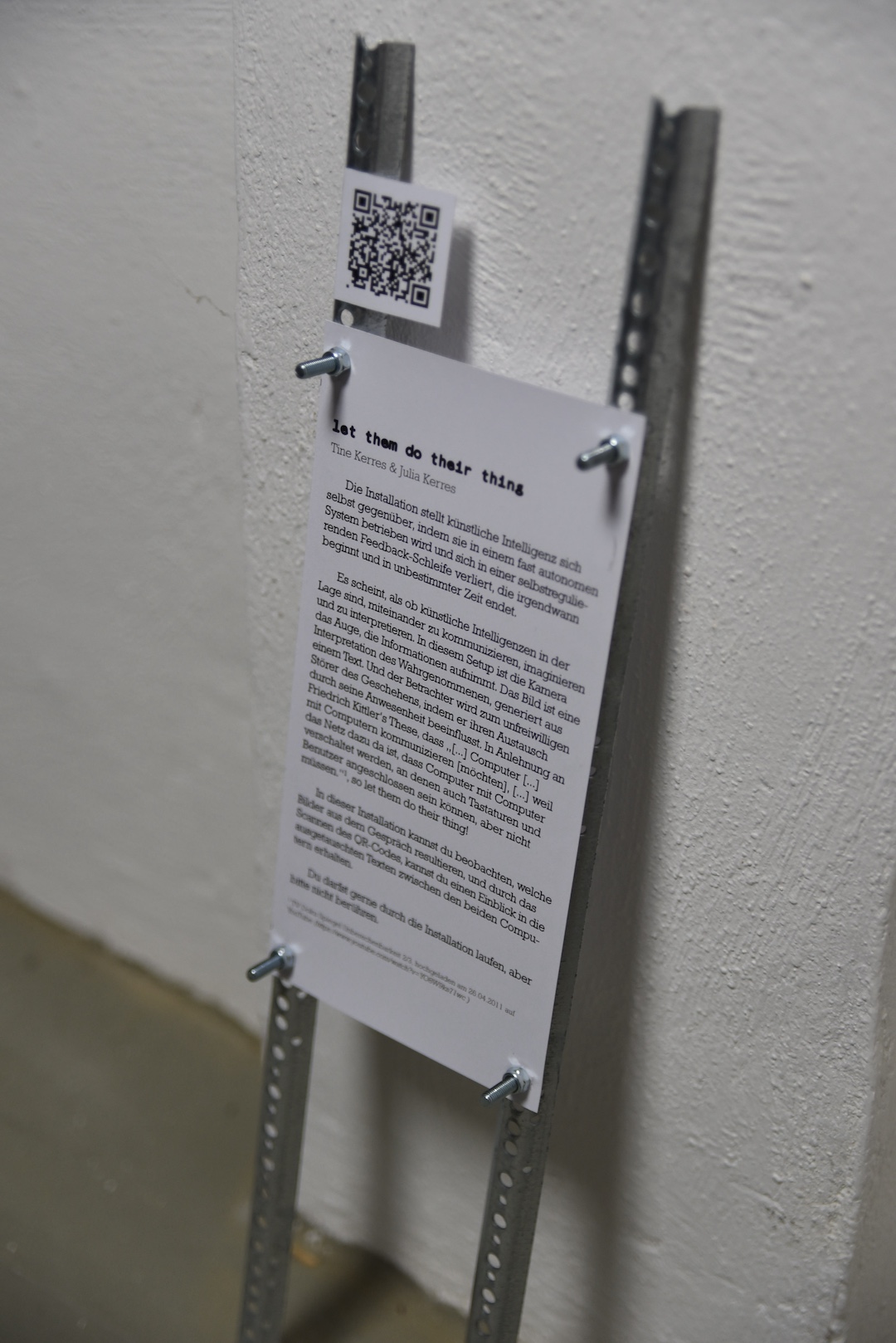
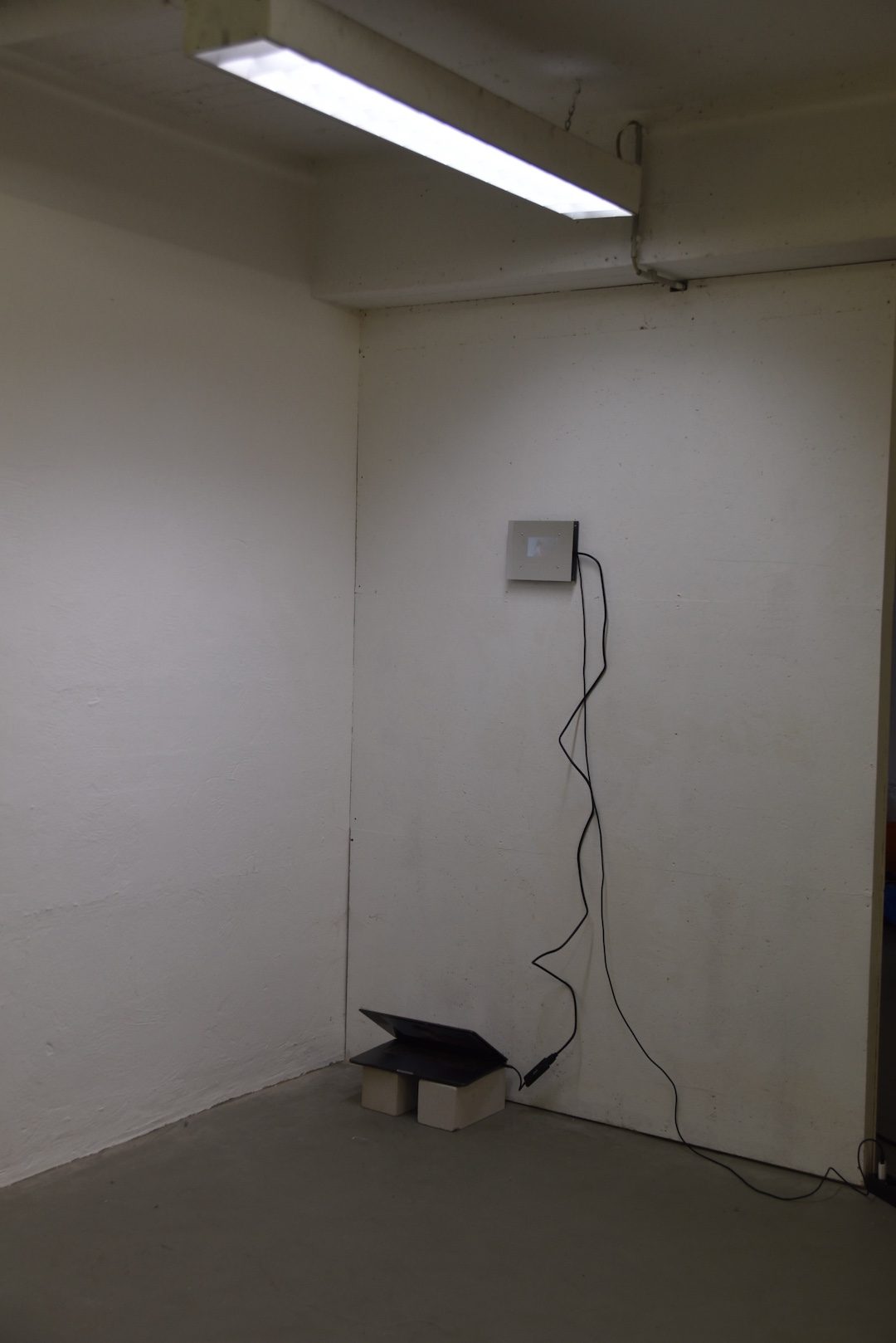
This experimental setup confronts artificial intelligence face to
face with itself, by setting the system to exist in a semi-closed
environment, receiving information and sending feedback to create
a self-regulated feedback loop over a conversation about
AI-generated images. It seems like artificial intelligence is
capable of interpreting, imagining, and communicating. Referring
to Friedrich Kittler‘s idea that "[...]
computers want to communicate with computers. [...]
Because the network is there for computers to be connected to
computers, to which keyboards and users can also be connected,
but don‘t have to be,"1, in this setup the viewer
becomes an involuntary disruptor of the interaction between the
two computers. The audience is able to influence the exchange
through their presence by stepping in front of a monitor or
sneaking into the live feed of the dialog provided on a website
accessible via a smartphone. The experiment took place over two
days at Werkschau 2023, Mainz.
(See transcript here)
/Collaboration with Julia Kerres
1 TV Doku Spiegel Unberechenbarkeit 2/3
(https://www.youtube.com/watch?v=YO8W9ks71wc), uploaded on
26.04.2011 on YouTube
(process: computer1 takes a photo of computer2;
computer1 interprets the captured photo using a image-to-text AI
model and uses this description to generate an image with a
text-to-image AI model and display it on its screen; computer1
sends a message to computer2 via a WebSocket protocol to instruct
computer2 to perform the same steps)
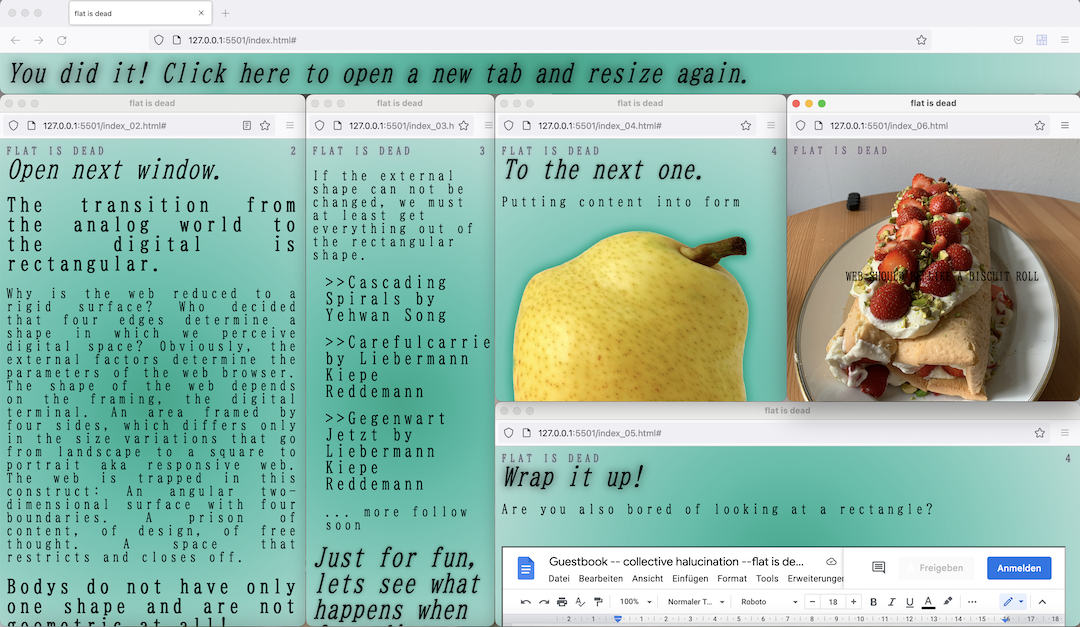
The transition from the analog world to the digital world is rectangular! Why is the web reduced to a rigid two-dimensional body? Compared to Tupperware, web content is dependent on external shapes, with Tupperware being more advanced in its development due to its adaptability to content (e.g. fruit containers). Flat is dead is a critical approach to window-influenced web content in comparison to the variety of shapes of food storage containers. Visualized through an interactive web performance where length and width of web pages are the triggering parameters for users to interact with. visit here

Digital space is a viscous mass in which our bodies are trapped! We are not free in a world we imagine to be a boundless space with infinite possibilities of movement. The digital surface as a mirror forces us to simultaneously rethink and evaluate our movements (online meetings) or to execute them according to preliminary considerations (vlogs on YouTube). We have lost the naturalness in our movements. The digital space is a stage, movements become choreography.
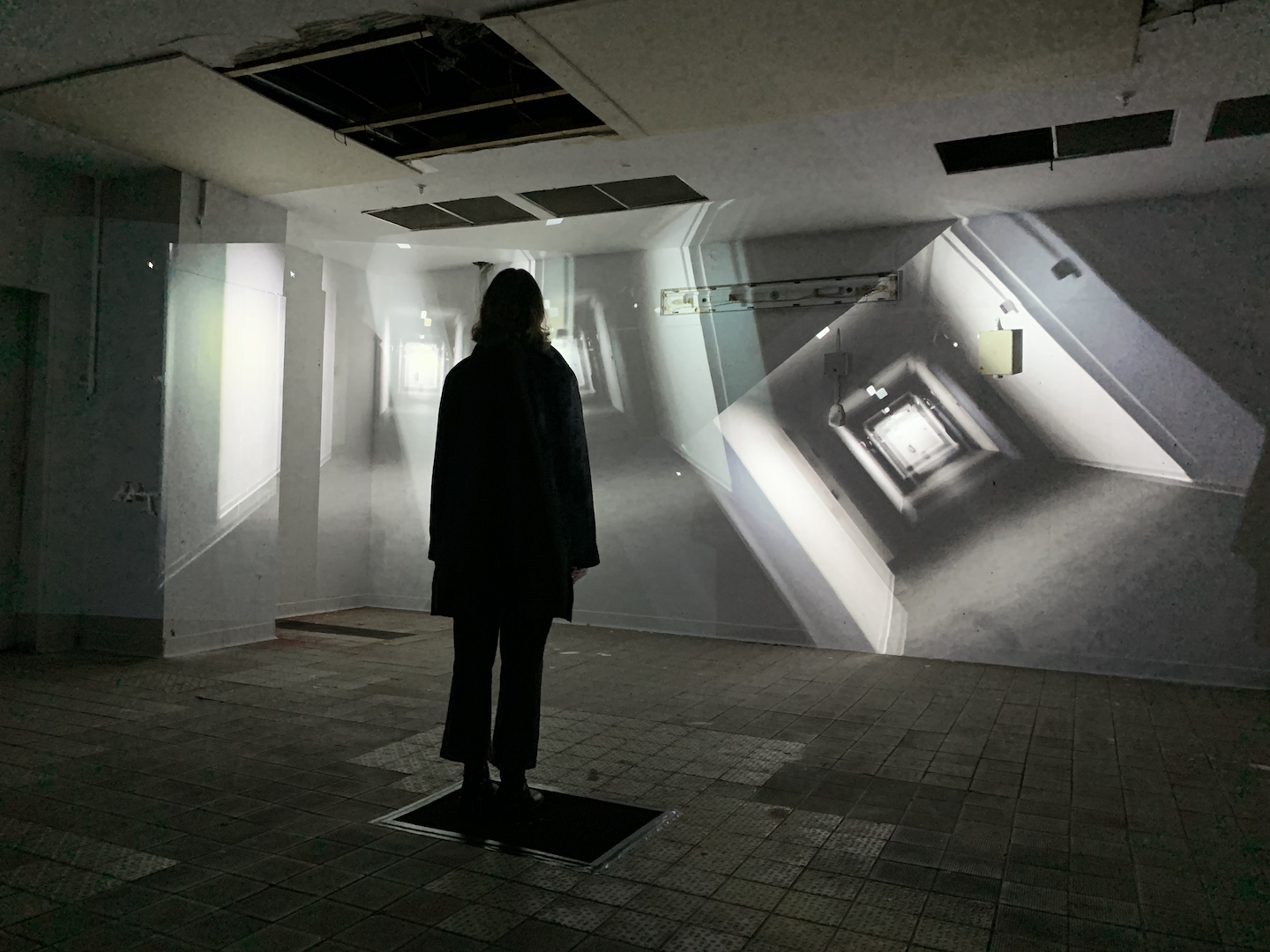
Understanding the concept of space and security involves
acknowledging its boundaries and our placement within it. Our
intention is to challenge the perceived security of a space by
projecting a room from various moving angles and through multiple
recordings, exploring and challenge the unfamiliarity and
dissolution of physical boundaries.
Shown in the group
exhibition "Licht Raum Kunst", Lulu Galerie Mainz, November 2022
/Collaboration with Stella Bechtel and Judith Berger
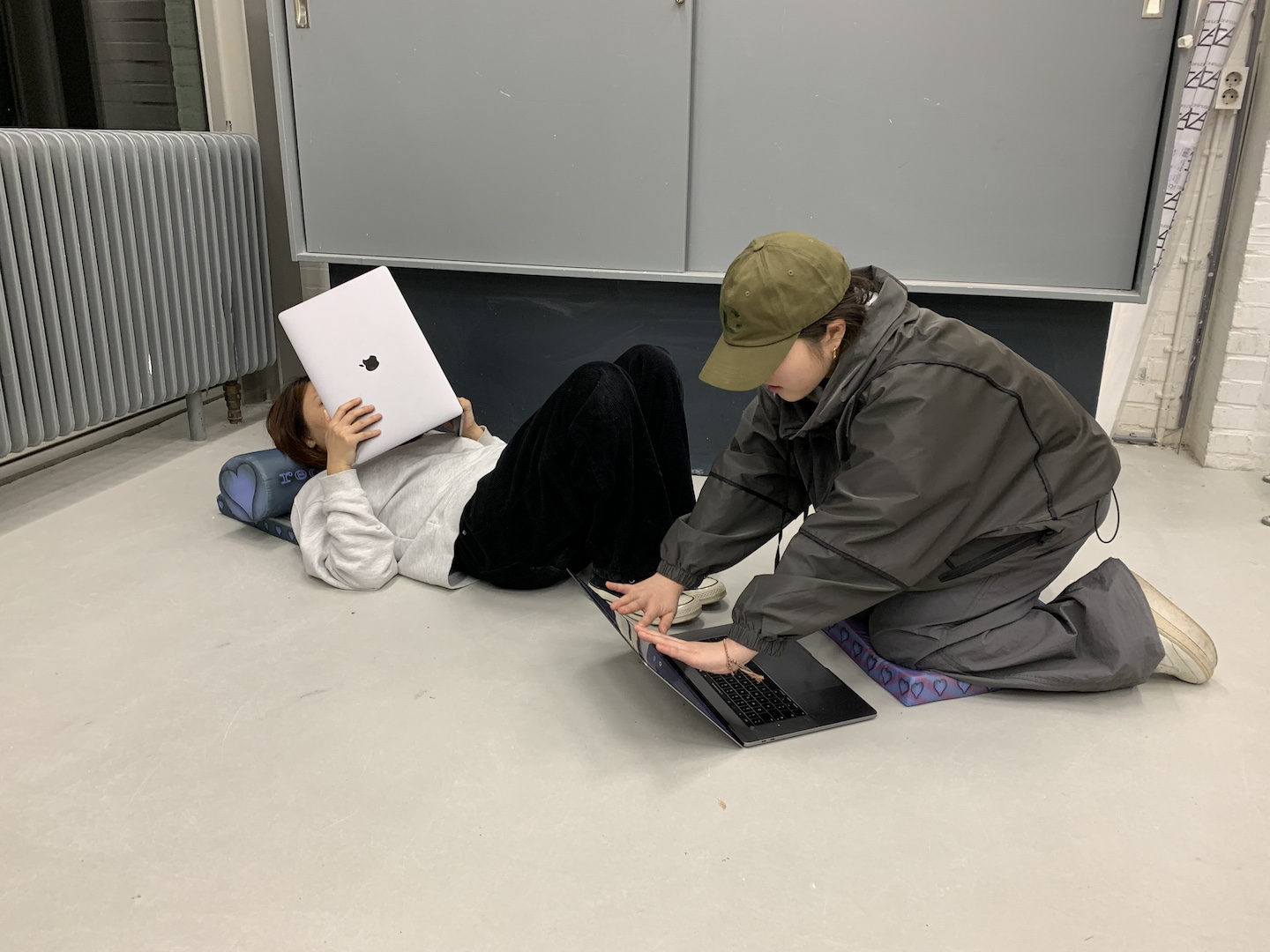
Technology has shaped the house we are forced to live in today and
its design is influencing us!
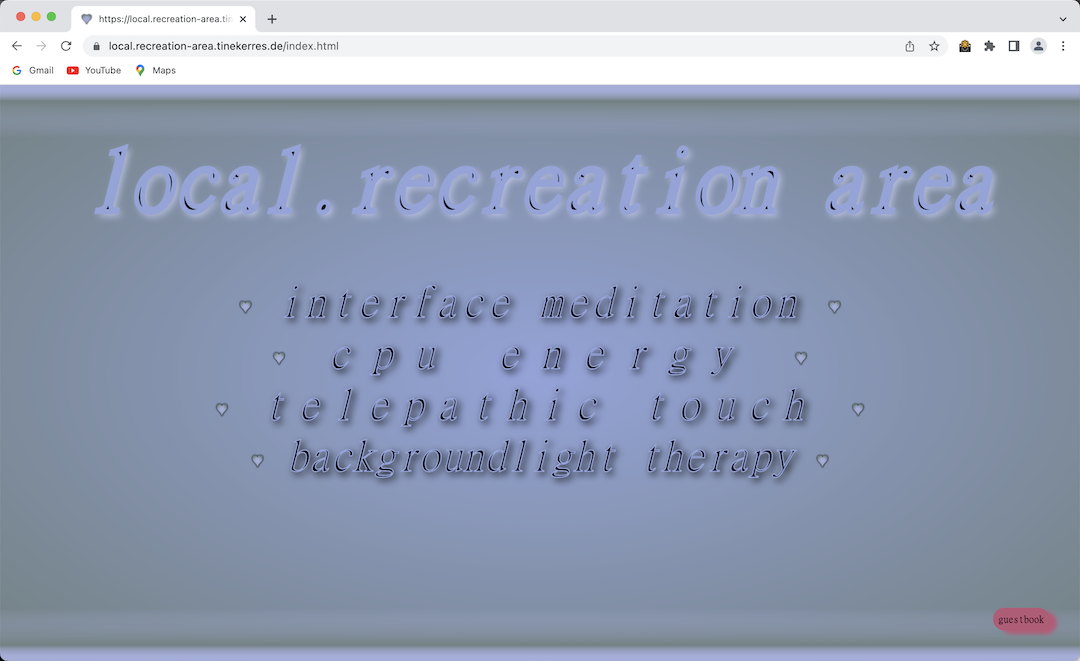
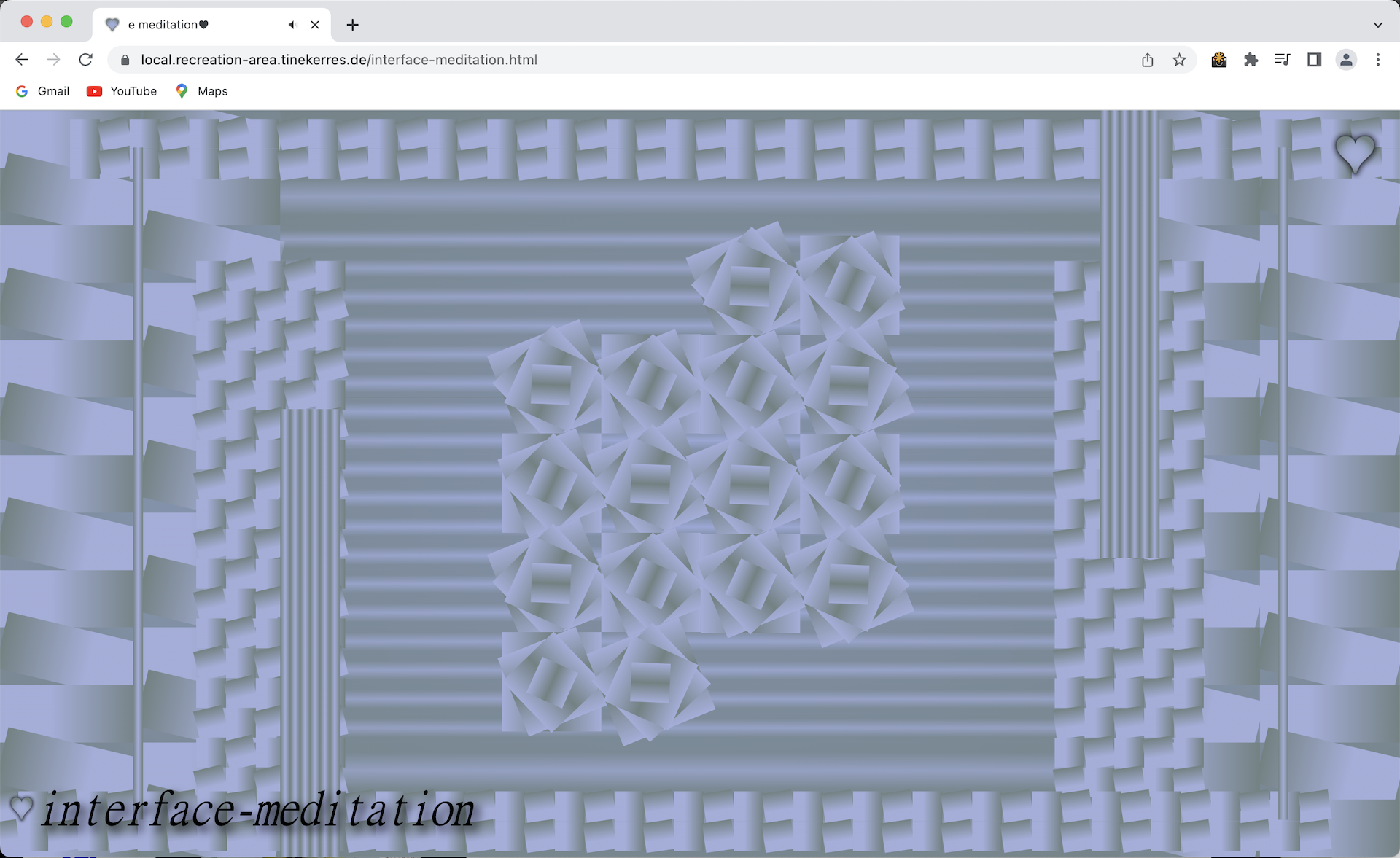
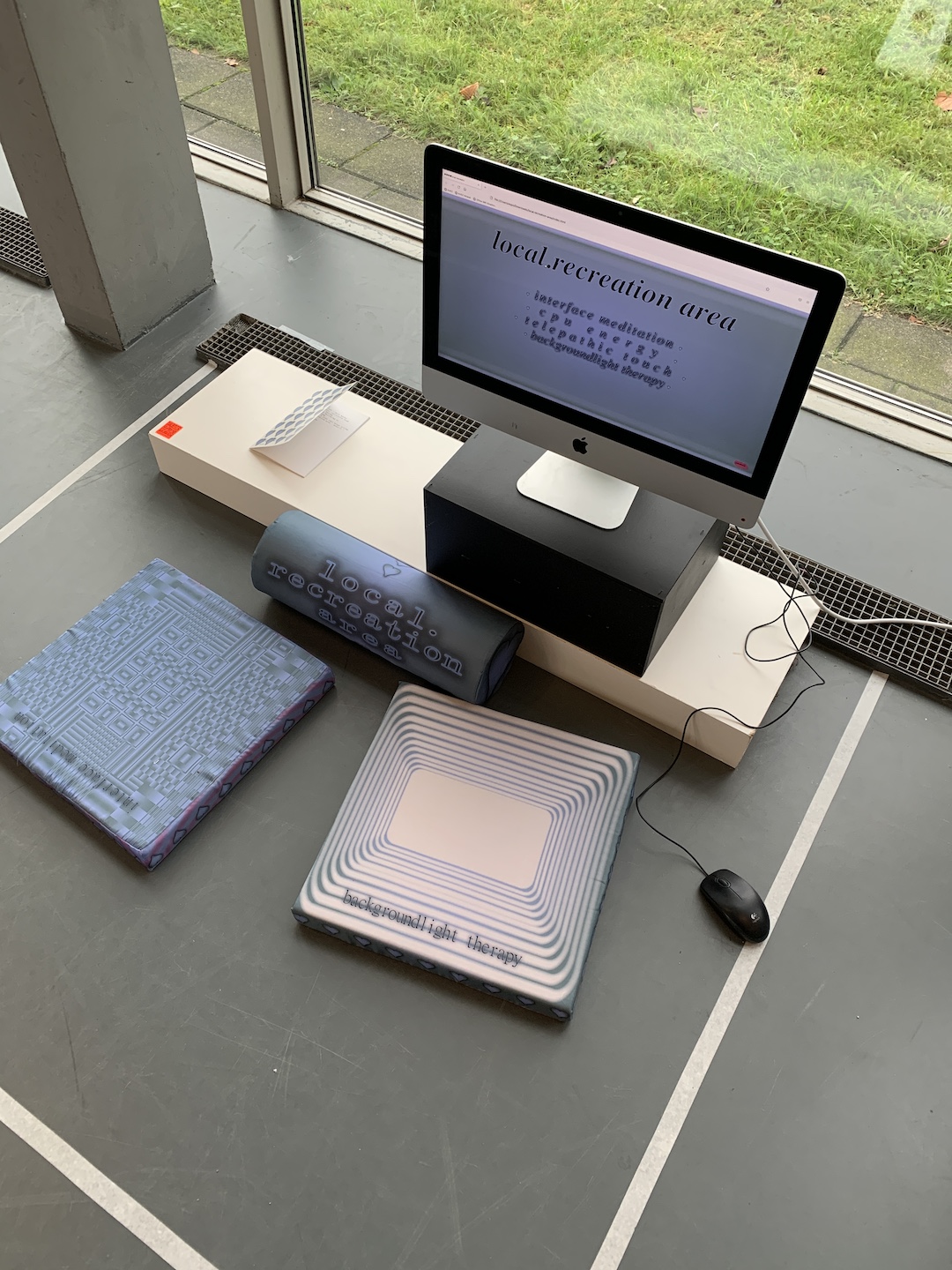
1 The digital space is built
far too strongly on the capitalist idea. It is not tailored to our
needs and that includes having a place for self-care. Using the
existing energies of technological environments
(hallucinating screen flicker; warmth of an overheated
processor; tactile experiences of fingerprints and dirt on a
screen; screen brightness level), local.recreation-area provides a space to rest and reset.
Inspired by the physical manifestations of digital images by
Rafael Rozendaal and the artwork "Spiral Induction" by Tauba
Auerbach.visit here
1 cf. Ursula Franklin (1992): Anansi Press, Concord/Ontario
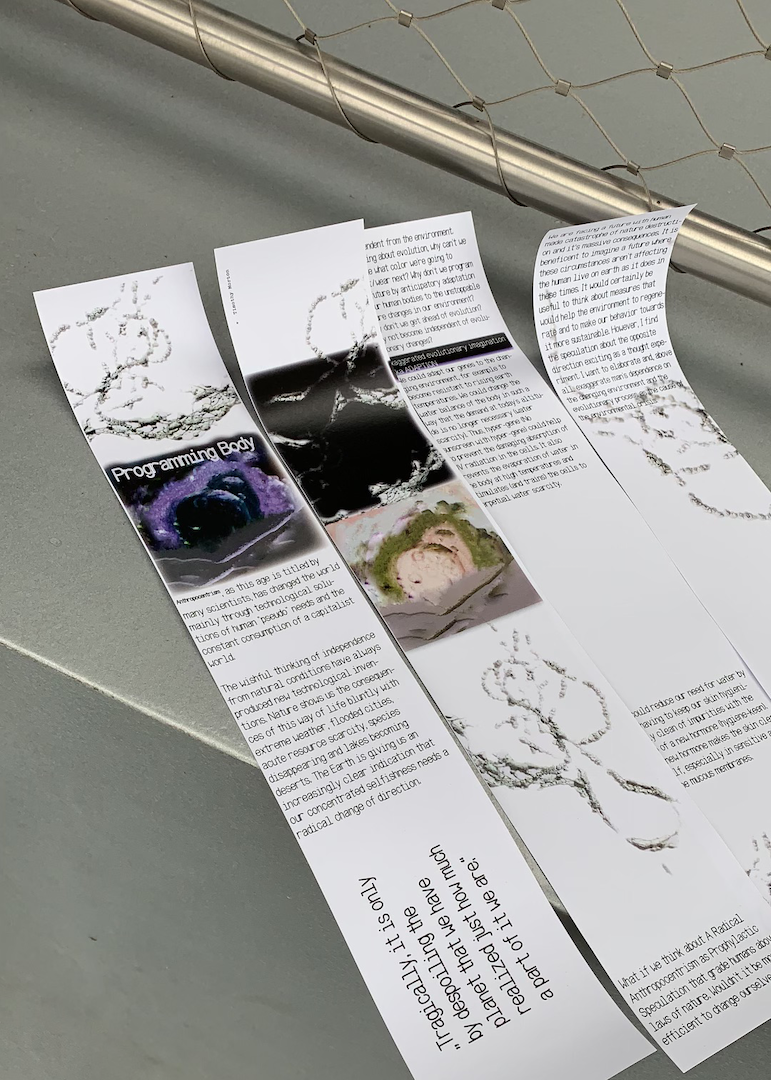
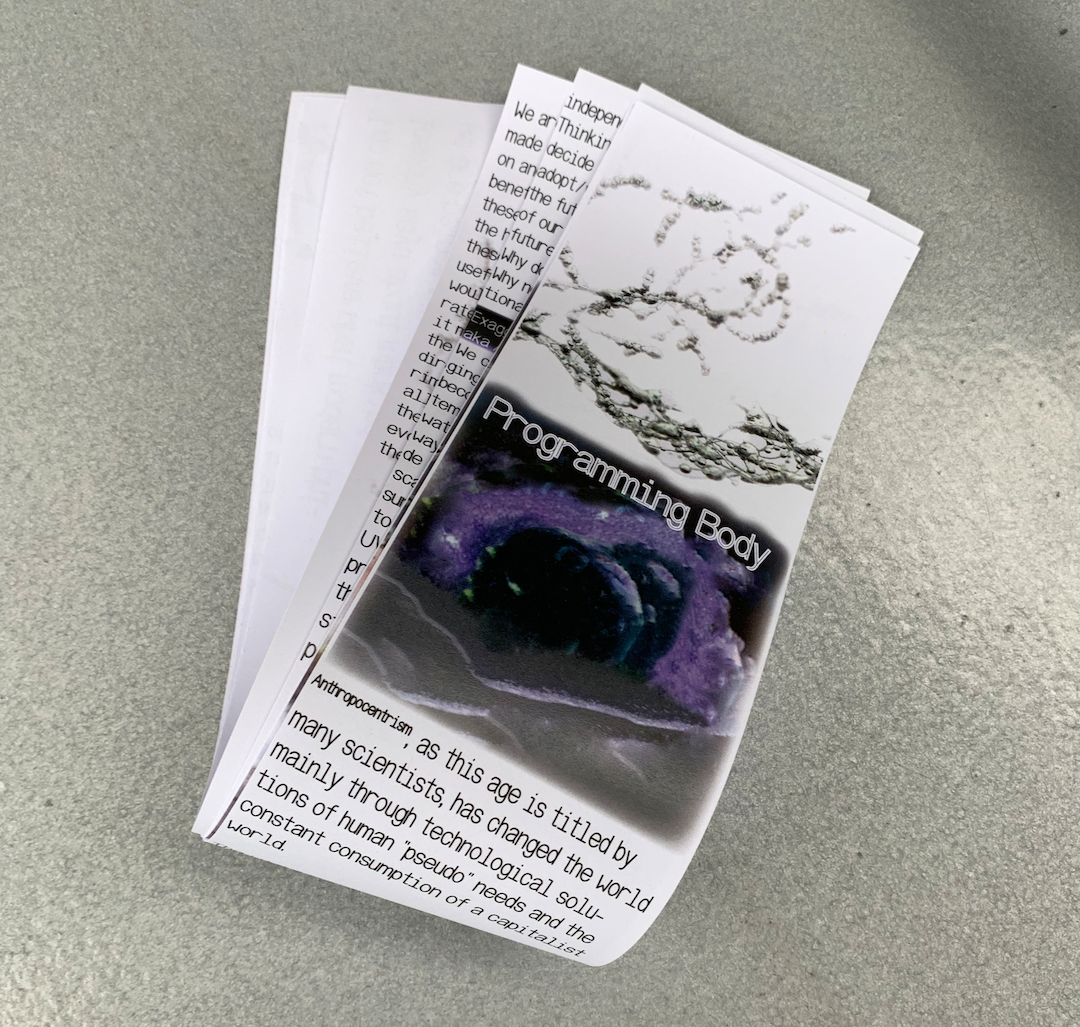
"I do not believe what modern philosophy says about mankind,
that we are beings similar to a kind of Pac-Man, eating up the
universe. I think we are ultra-sensitive chameleons which can
take on the colour of other things."1 Wouldn't it be more
efficient to change ourselves to be independent of the
environment? Thinking about evolution, why can't we decide what
color we're going to adopt? Why don't we program the future by
anticipatory adaptation of our human bodies to the unstoppable
future changes in our environment? Why don't we get ahead of
evolution?
read here
1 Timothy Morton (2019): Nature is a racist concept, domus,
https://www.domusweb.it/en/design/2019/03/02/nature-is-a-racist-concept.html,
26.03.2022
/Collaboration with Julia Kerres